A chef’s knife is an indispensable tool in any kitchen, capable of performing a multitude of cutting tasks with precision and efficiency. However, to truly unlock the full potential of your chef’s knife, it’s essential to master a variety of knife techniques. Whether you’re a beginner in the kitchen or a seasoned home cook, understanding and practicing these essential knife techniques will elevate your culinary skills and make your time in the kitchen more enjoyable. In this article, we will explore some of the fundamental knife techniques that will help you unlock the full potential of your chef’s knife.
The Rocking Motion
The rocking motion is one of the most common and versatile knife techniques. To perform this technique, place the tip of the chef’s knife on the cutting board and lift the handle slightly. With a gentle back and forth motion, move the knife’s blade up and down while keeping the tip in contact with the cutting board. This technique is particularly useful for tasks like mincing garlic, chopping herbs, and dicing vegetables.
The Slice
The slice technique involves making smooth, controlled cuts through food items. To execute this technique, hold the chef’s knife with a firm grip and guide the blade through the food in a controlled motion. This technique is ideal for slicing ingredients like fruits, vegetables, and proteins into thin, even slices.
The Chop
The chop is a technique used to cut ingredients into smaller, rougher pieces. To chop effectively, hold the chef’s knife handle firmly and bring the blade down in a downward motion, keeping your fingers tucked safely away from the blade. This technique is commonly used for cutting onions, peppers, and other ingredients that require larger, more irregular pieces.
The Julienne
Julienne is a technique used to create long, thin strips of vegetables or other ingredients. To julienne, start by cutting the ingredient into rectangular pieces. Then, make long, even cuts along the length of the ingredient to create thin strips. This technique is frequently used for preparing vegetables for stir-fries or salads.
The Chiffonade
The chiffonade technique is primarily used for cutting leafy greens or herbs into thin, delicate strips. To chiffonade, stack the leaves or herbs on top of one another, roll them tightly, and slice across the roll to create thin ribbons. This technique is perfect for garnishing dishes or adding flavor to salads and soups.
The Pinch Grip
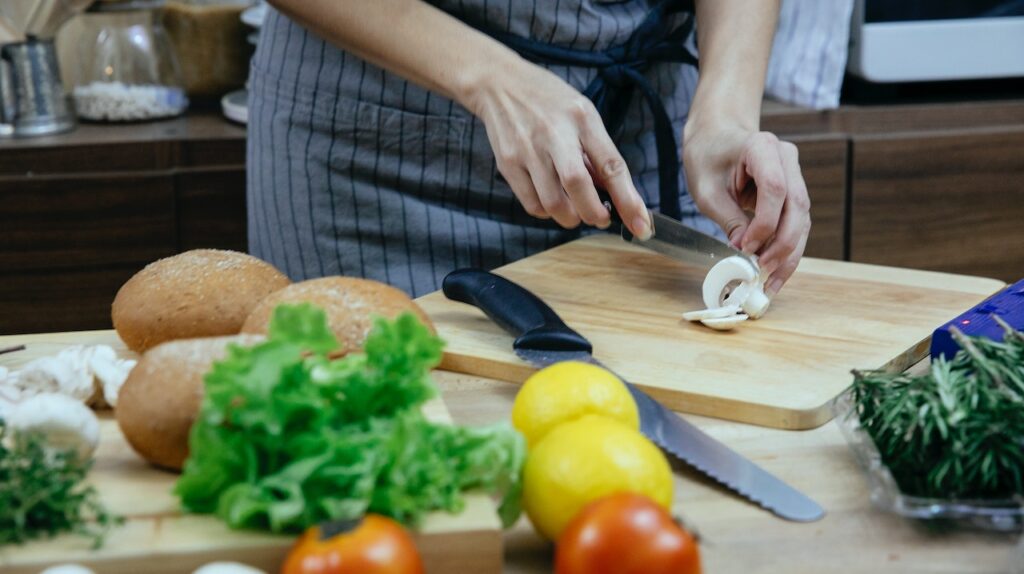
Mastering the proper grip is crucial for efficient and safe knife techniques. The pinch grip is a widely recommended technique that provides control and precision. To achieve the pinch grip, hold the chef’s knife with your thumb and index finger gripping the blade just above the handle, while the other fingers curl around the handle. This grip allows for precise control over the knife and reduces the risk of accidents.
The Claw Grip
The claw grip is a hand position used to hold ingredients safely while cutting. To use the claw grip, curl your fingers into a claw shape, tucking your fingertips under and resting the knuckles against the side of the knife blade. This grip keeps your fingers away from the blade and provides stability and control while cutting.
The Honing and Sharpening
Maintaining the sharpness of your chef’s knife is essential for efficient and safe cutting. Regularly honing your knife using a honing steel helps to realign the edge and keep it sharp. Sharpening the blade using a sharpening stone or a professional sharpening service is necessary to restore the edge when the knife becomes dull. Proper honing and sharpening techniques will ensure that your chef’s knife remains in optimal condition.
The Safety Tips
Knife safety is of utmost importance in the kitchen. Always ensure that you have a stable cutting surface, such as a cutting board, to prevent accidents. When using your chef’s knife, keep your focus on the task at hand and avoid distractions. Be mindful of your hand placement and keep your fingers tucked away from the blade. When storing your knife, use a knife guard or store it in a knife block to protect both the blade and yourself from accidental cuts.
The Practice and Patience
Like any skill, mastering knife techniques requires practice and patience. Start with simple cutting tasks and gradually move on to more complex techniques. Take your time, focus on proper form and technique, and always prioritize safety. Over time, with consistent practice, you will become more comfortable and confident in using your chef’s knife.
Understanding and practicing essential knife techniques are essential for unlocking the full potential of your chef’s knife. The rocking motion, slice, chop, julienne, chiffonade, along with proper grip and safety techniques, will enhance your cutting precision and efficiency in the kitchen. Remember to maintain the sharpness of your knife through honing and sharpening and always prioritize safety. With practice and patience, you will soon master these essential knife techniques and elevate your culinary skills to new heights.